


28.12.2025
How
Study
CIP in the Confectionery Industry: Real Challenges and How They Are Solved
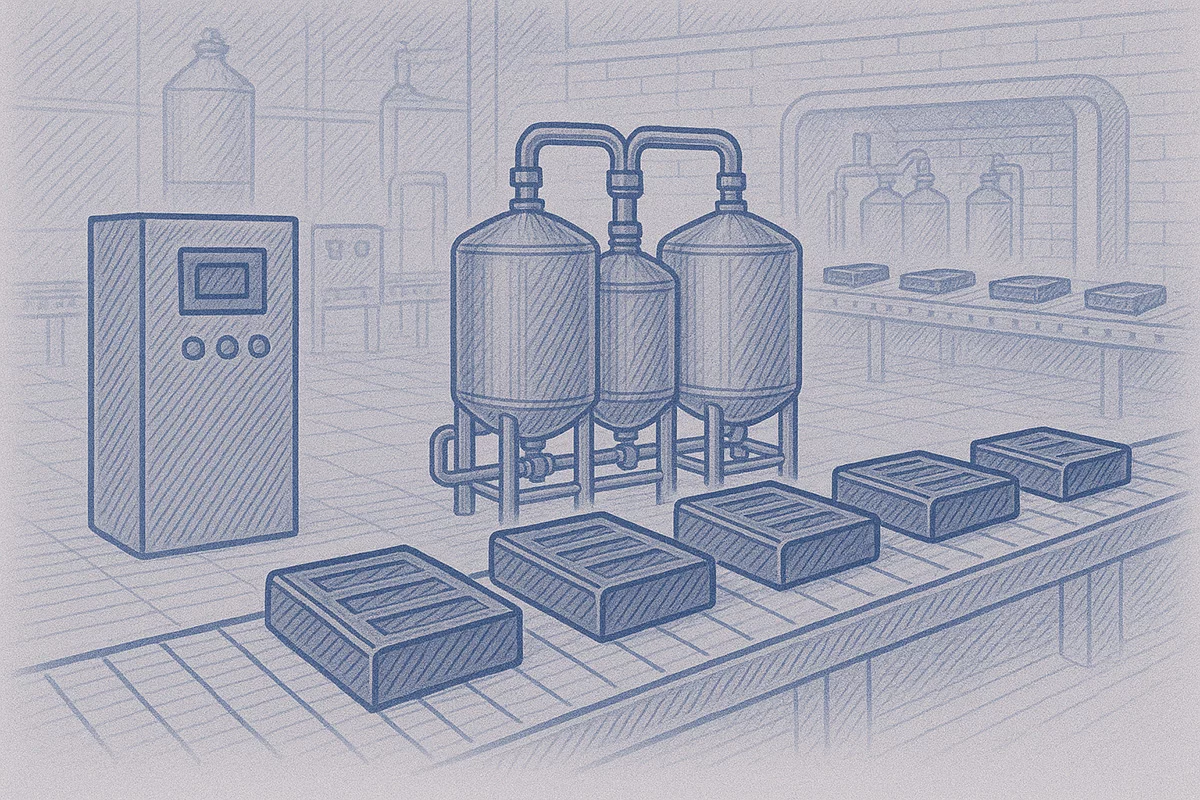
Confectionery production is one of the most demanding sectors in terms of sanitation. Unlike dairy or beverages, it involves viscous, sticky, and often unstable products such as syrups, caramel, chocolate, fats, and creams.
Although CIP systems are formally present at most facilities, in practice the confectionery sector frequently faces issues with cleaning quality, downtime, and excessive consumption of water and chemicals.
Let’s look at the real challenges manufacturers face and how they are solved in practice.
Challenges in Confectionery Production Cleaning
1. Viscous and Sticky Products
Sugar, caramel, fats, and chocolate:
- quickly adhere to pipe and equipment surfaces
- are difficult to remove with water alone
- can “bake on” if temperature is not properly controlled
What happens in practice:
- product residues remain after CIP
- additional cleaning cycles are required
- water and chemical consumption increases
2. Frequent Recipe Changes (SKU)
In confectionery production, this is standard:
- different flavors
- different fat compositions
- allergens (nuts, milk, etc.)
The challenge:
- high risk of cross-contamination
- long downtime between product changes
- dependence on operator performance
3. Complex Equipment Areas
Typical risk zones include:
- heat exchangers
- agitated tanks
- long pipelines with bends
- sections with low flow velocity
Result:
- so-called “dead zones”
- inconsistent cleaning performance
- gradual buildup of contamination
4. Inconsistent Manual or Semi-Automatic Processes
Even with CIP systems, there is often:
- manual connection of circuits
- manual parameter control
- adjustments “by experience”
Outcome:
- each cleaning cycle varies
- difficult to validate cleaning quality (audit issues)
- strong human factor impact
5. Excessive Use of Water and Chemicals
A common approach:
- “better longer and more than insufficient”
- lack of precise concentration control
As a result:
- overconsumption of caustic and acid
- large wastewater volumes
- increased operational costs
How These Challenges Are Solved in Practice
It is important to understand that simply having a CIP system does not guarantee effective cleaning. The key lies in proper system configuration and optimized cleaning regimes.
1. Product-Specific Cleaning Regimes
In confectionery, a single cleaning recipe is not sufficient:
- different temperatures for sugars and fats
- different caustic concentrations
- controlled contact time
In practice, separate recipes are developed for:
- chocolate lines
- syrup systems
- cream-based products
2. Real-Time Control of Critical Parameters
Without proper control, CIP becomes just circulation.
Key parameters:
- conductivity (chemical concentration)
- temperature
- flow rate and velocity
This ensures:
- elimination of under-cleaning
- prevention of chemical overuse
- consistent and repeatable results
3. Proper System Hydraulics
One of the most underestimated factors.
Common issues:
- incorrect pipe diameters
- lack of proper slope
- insufficient flow velocity
In practice, this leads to:
- areas that cannot be effectively cleaned
- zones where cleaning solution stagnates
Solution: hydraulic recalculation and piping optimization.
4. Addressing Critical Cleaning Zones
Special attention is given to:
- heat exchangers
- mixers and agitators
- dead-end sections
Solutions include:
- dedicated CIP circuits
- intensified cleaning regimes
- optimized time and temperature parameters
5. Automation and Data Logging
This is no longer optional.
Benefits:
- consistent results across shifts
- transparency for HACCP and ISO compliance
- simplified audits
Parameters recorded:
- temperature
- concentration
- cycle duration
6. Chemical Recovery and Cost Reduction
With proper system design:
- caustic and acid solutions can be reused
- water consumption is reduced
- wastewater load is minimized
Our Approach to CIP Projects in Confectionery
In the confectionery industry, every project is unique.
1. Production Audit
- pipeline layout analysis
- identification of problem areas
- evaluation of existing cleaning regimes
2. Identification of Bottlenecks
Typically:
- insufficient flow velocity
- incorrect temperature profiles
- improper cleaning sequence
3. Solution Design and Optimization
Depending on the case:
- upgrade of existing CIP systems
- automation implementation
- cleaning recipe optimization
- resource consumption reduction
4. Integration into Existing Production
Without disrupting operations:
- connection to existing lines
- integration with PLC and SCADA
- staff training
Conclusion
In confectionery production, the issue is usually not the absence of CIP, but that the system:
- is incorrectly configured
- does not account for product characteristics
- does not deliver consistent results
A properly designed CIP system provides:
- consistent cleaning quality
- reduced downtime
- allergen control
- lower operating costs
Most importantly, it ensures predictability, which is often missing in real production environments.