


28.10.2025
How
Study
How to Automate Cleaning at a Production Facility Without Large Investments
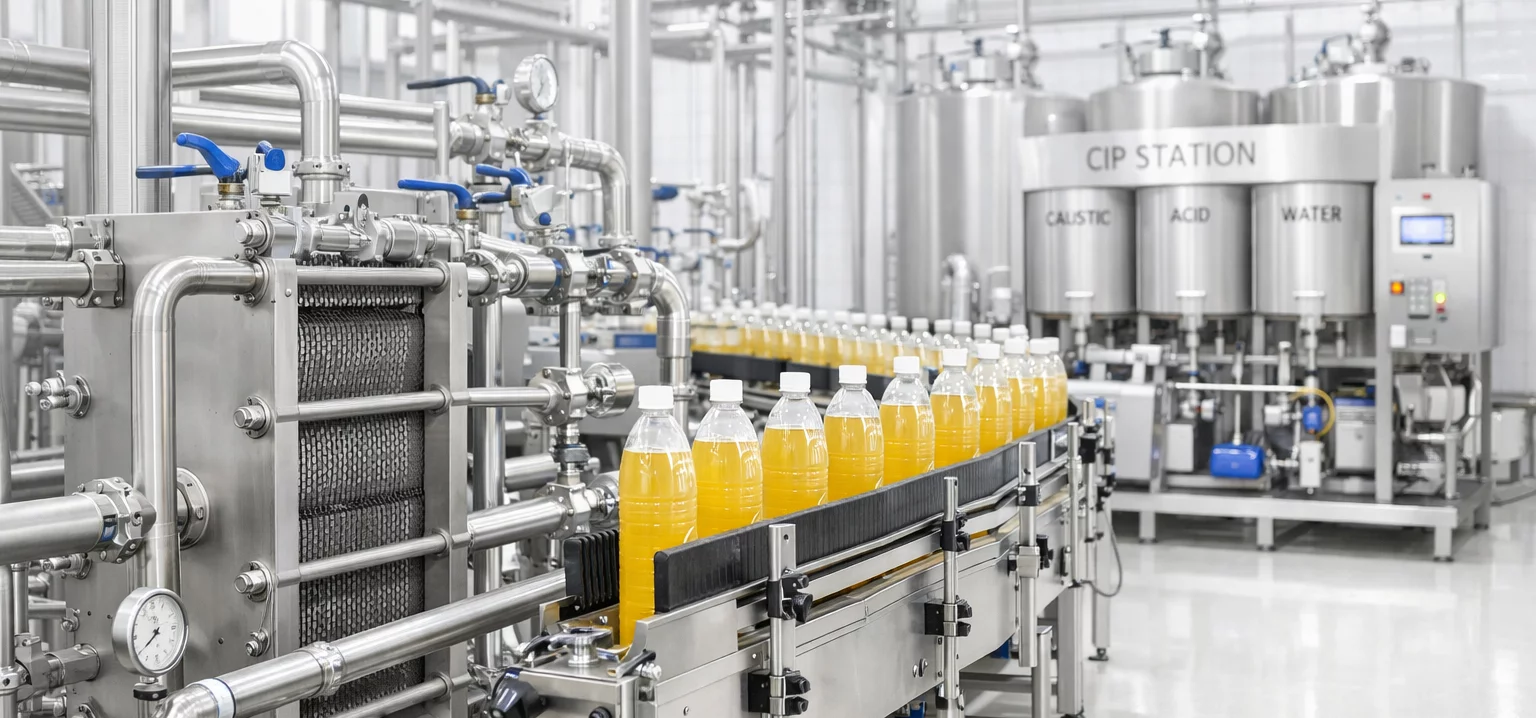
Cleaning automation in manufacturing does not always require significant investment. Even with a limited budget, it is possible to move from manual cleaning to a controlled and stable process, reduce downtime, lower resource consumption, and comply with HACCP requirements.
In this article, we look at a practical approach: how to implement automation step by step, what to introduce first, and how to achieve results within the first months.
Why Manual Cleaning Costs More Than It Seems
Manual cleaning is rarely treated as a separate cost item, but it consistently reduces production efficiency.
Main hidden losses include:
- downtime due to disassembly and reassembly
- repeated cleaning cycles
- excessive use of water and chemicals
- inconsistent cleaning quality
- errors in HACCP documentation
- dependence on personnel
As a result, the company loses not only money, but also control over the process.
What Cleaning Automation Delivers
Even basic solutions provide fast results:
- consistent cleaning quality
- reduced human factor
- shorter cleaning time
- transparency for HACCP and audits
- reduced water and chemical consumption
The process becomes repeatable and controlled.
How to Automate Cleaning Without High Costs
There are three levels of implementation that do not require major investments.
1. Partial Automation
The first step is process standardization.
Recommended actions:
- fixed cleaning programs
- timers and signaling
- checklists and visual instructions
- color coding of hoses
- basic temperature sensors
This reduces variability and improves consistency.
2. Budget CIP Systems
The next step is implementing CIP cleaning.
A basic setup includes:
- mobile CIP unit
- one or two tanks
- pump
- heating system
- basic controller
Advantages:
- automatic cycle execution
- reduced manual labor
- stable process parameters
- ability to serve multiple areas
These systems can be implemented gradually, starting from the most critical zones.
3. Retrofitting Without Stopping Production
Automation can be introduced without stopping the production line.
Key principles:
- preparing components in advance
- step by step integration
- installation outside working hours
- test runs before launch
This approach helps avoid downtime and keeps production running.
How to Reduce Costs
Costs can be significantly reduced by reusing existing equipment.
Often suitable:
- pumps
- heat exchangers
- tanks
- stainless steel piping
- sanitary fittings
Additional options:
- IBC containers
- existing control panels
- available PLC resources
This approach lowers capital investment without compromising performance.
Automation and HACCP
To comply with HACCP, it is important not only to perform cleaning, but also to control and record process parameters.
Minimum requirements:
- time and temperature control
- concentration control
- process logging
- use of checklists
Automation ensures traceability, audit readiness, and fewer errors.
Practical Results
After implementing basic automation, companies typically achieve:
- 20-40 percent reduction in cleaning time
- lower water and chemical consumption
- reduced product losses
- easier audits
- more stable production
The process becomes controlled and predictable.
Where to Start
With a limited budget, a step by step approach is recommended:
- standardize processes
- implement basic sensors
- install a mobile CIP system for one area
- gradually expand automation
This approach delivers quick results without unnecessary costs.
Viravix Solutions
Viravix helps implement cleaning automation based on real production needs:
- selection and implementation of CIP systems
- modernization of existing lines
- reuse of available equipment
- adaptation to HACCP requirements
- implementation without stopping production
Solutions are tailored to budget and technical requirements.
Conclusion
Cleaning automation is a manageable process that does not require large investments when implemented correctly.
Even basic improvements allow companies to:
- reduce costs
- improve quality
- prepare for audits
- scale production
A step by step approach ensures stable results and long term growth.