


27.02.2026
How
Study
Heat Exchanger Comparison: Plate, Tubular and Scraped Surface
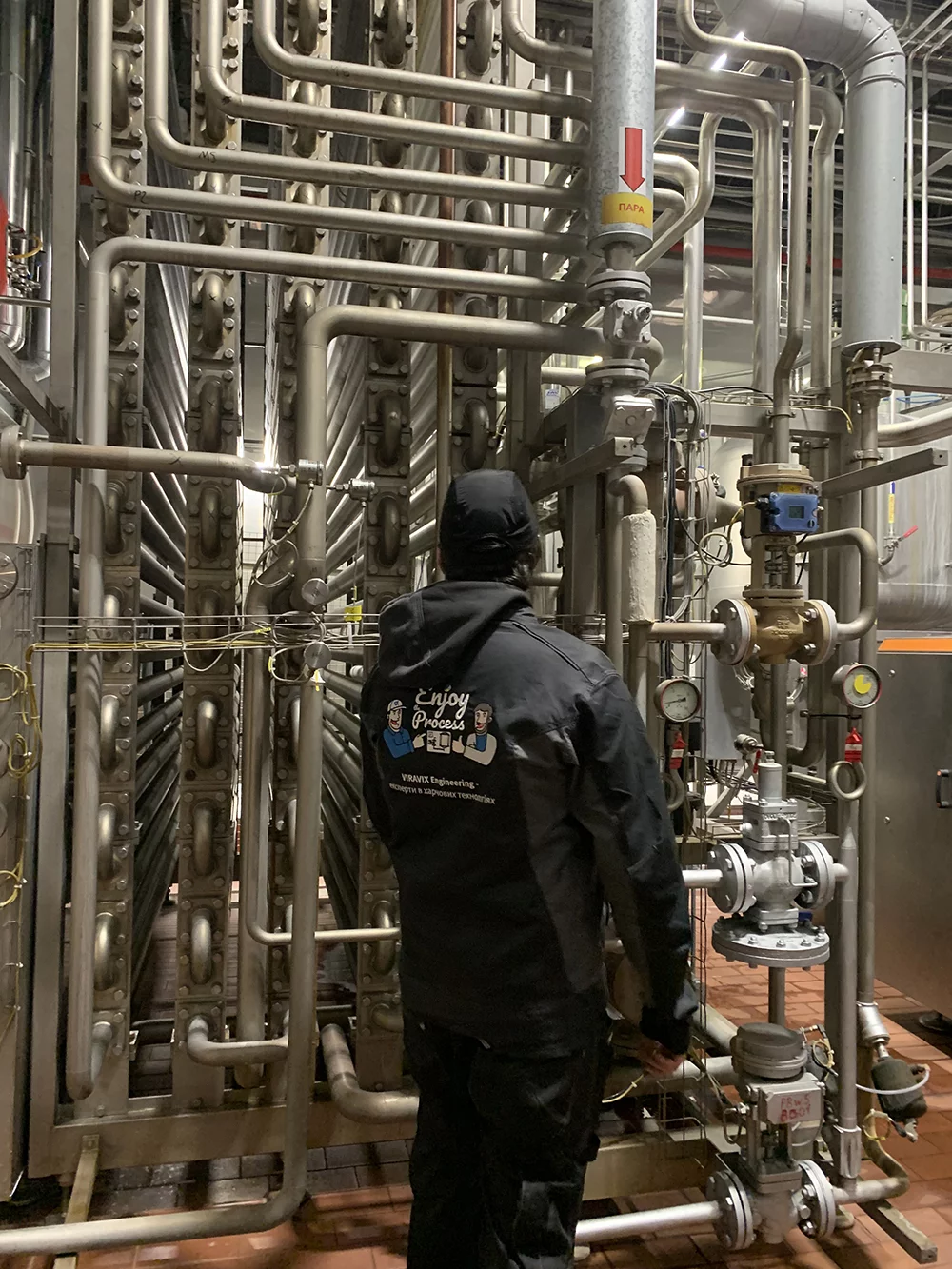
In industrial applications, heat exchangers are used not only for cooling, but also for heating, pasteurization, sterilization and heat recovery. The correct selection of a heat exchanger directly affects energy efficiency, product quality, process stability and operating costs.
The same calculated kilowatt of thermal capacity can result in very different actual costs due to pressure drop, fouling, cleaning frequency and downtime. This is especially critical in hygienic industries – food, dairy and pharmaceutical processing – where sanitary requirements and process consistency are essential.
Therefore, when selecting a heat exchanger, it is important to consider not only capacity, but also product properties, CIP/SIP requirements, viscosity and fouling tendency.
In this article, we compare three key types of heat exchangers used in hygienic applications: plate, tubular and scraped surface heat exchangers.
What is a Heat Exchanger and How It Affects the Process
A heat exchanger is a device that transfers heat between two media through a separating wall without mixing them.
In engineering practice, the following equation is used:
Q = U x A x LMTD
where:
- Q – heat duty
- U – overall heat transfer coefficient
- A – heat transfer area
- LMTD – log mean temperature difference
The type of heat exchanger affects all three parameters, and therefore impacts:
- heating or cooling rate
- temperature control accuracy (critical for pasteurization)
- energy consumption
- product quality consistency
Plate Heat Exchanger: High Efficiency for Clean Fluids
Plate heat exchangers are widely used in cooling, heating and heat recovery applications, especially for clean and low-viscosity fluids.
Typical applications include:
- milk and beverage pasteurization
- hot water systems
- process fluid cooling
- heat recovery systems
Advantages
- High heat transfer efficiency
- Low temperature approach – critical for pasteurization
- Compact design
- Efficient heat recovery
- Suitable for CIP cleaning
Limitations
- Sensitive to fouling
- Limited for high-viscosity products
- Requires filtration
Conclusion: plate heat exchangers are the best choice for clean fluids and energy-efficient processes.
Tubular Heat Exchanger: Reliability for Challenging Products
Tubular heat exchangers are used in processes involving viscous, particulate or sensitive products.
They are commonly applied in:
- juice pasteurization with pulp
- sauces and creams heating
- pharmaceutical processes
- products with particles
Advantages
- Excellent handling of products with particles
- Hygienic design
- Suitable for CIP and SIP
- Reliable in continuous operation
Limitations
- Larger footprint compared to plate units
- Lower heat transfer coefficient
- Higher CAPEX
Conclusion: tubular heat exchangers are a versatile solution for hygienic processes with complex products.
Scraped Surface Heat Exchanger: For Viscous and Fouling Products
Scraped surface heat exchangers are designed for the most demanding applications involving viscous, sticky or fouling products.
Typical applications include:
- creams, pastes and desserts
- chocolate and confectionery processing
- pharmaceutical ointments and gels
- products prone to fouling or sticking
Advantages
- Continuous surface cleaning
- Suitable for high-viscosity products
- Prevents fouling and product burning
- Stable heat transfer performance
Limitations
- Higher cost
- More complex design
- Requires skilled maintenance
Conclusion: scraped surface heat exchangers are essential for processes where other types fail due to fouling or viscosity.
How to Select a Heat Exchanger for Hygienic Processing
Selecting the right heat exchanger requires balancing thermal performance, product characteristics and sanitary requirements.
Key selection criteria include:
- Process type – heating, cooling, pasteurization
- Product properties – viscosity, particles
- Temperature sensitivity
- CIP/SIP requirements
- Allowable pressure drop
- Material and compliance requirements (EHEDG, FDA)
An incorrect choice can lead to:
- reduced product quality
- higher energy consumption
- frequent cleaning downtime
Which Heat Exchanger Should You Choose
Typical selection guidelines:
- Plate – for clean fluids and high energy efficiency
- Tubular – for products with particles or moderate viscosity
- Scraped surface – for viscous, sticky and challenging products
Energy Efficiency and Cost Impact
The type of heat exchanger directly affects:
- energy consumption
- temperature control stability
- product losses
- cleaning frequency
In hygienic industries, this impacts not only operating costs but also product quality.
A properly selected solution allows you to:
- reduce energy consumption
- improve process stability
- minimize product losses
- reduce downtime
Typical payback period is 6-24 months.
Conclusion
- Plate heat exchangers – efficiency and compactness
- Tubular heat exchangers – versatility and hygienic reliability
- Scraped surface heat exchangers – performance in the most demanding applications
The optimal choice depends on product properties, process requirements and operating conditions.
Practical Recommendation
If you are selecting a heat exchanger for heating, cooling or pasteurization, it is essential to base your decision on real process conditions rather than nominal capacity.
An engineering calculation helps identify the optimal solution in terms of energy efficiency, product quality and total cost of ownership.